
 By
By
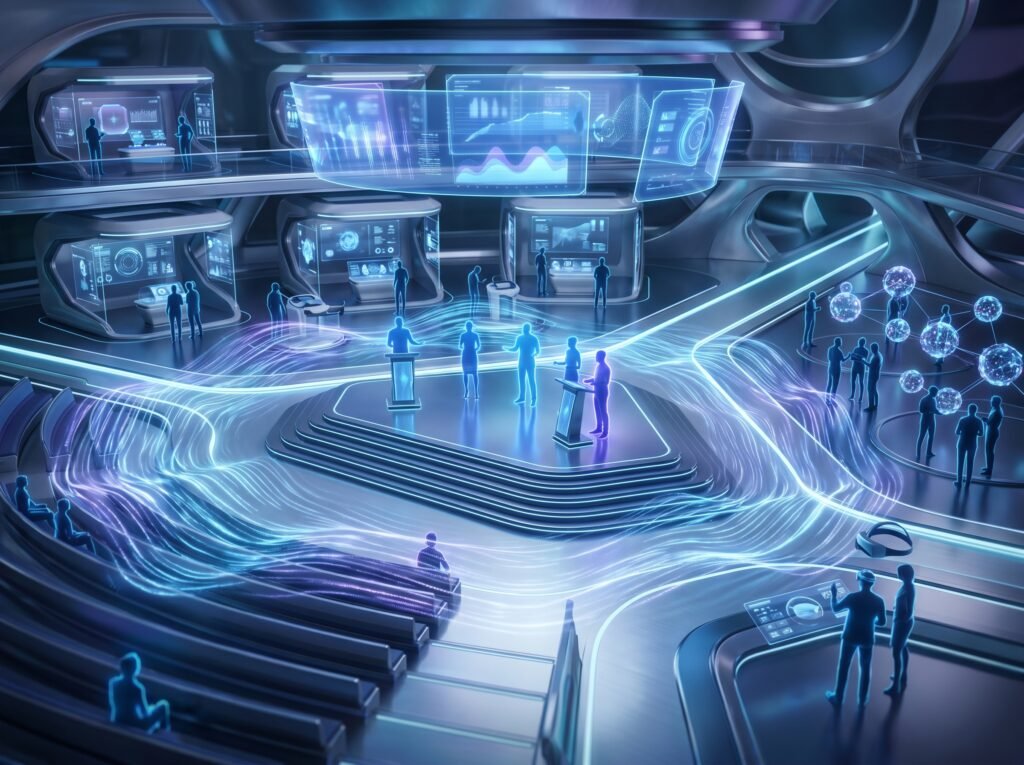
How Immersive Technologies Are Finally Solving Virtual Event Fatigue
Introduction
When virtual events exploded in popularity during the early 2020s, they solved a critical problem: keeping people connected regardless of geography. Conferences, trade shows, training sessions, and industry summits suddenly became accessible to global audiences with just a few clicks.
Yet as virtual attendance increased, so did a new challenge—virtual fatigue.
Attendees found themselves spending hours staring at grids of faces, navigating static webinar interfaces, and struggling to stay engaged through long sessions. While virtual platforms successfully delivered content, they often failed to recreate the energy, spontaneity, and social dynamics that make in-person events memorable.
One of the biggest complaints from attendees was the feeling of isolation. Traditional virtual events typically offered limited networking opportunities and lacked the environmental cues that help people naturally engage with one another in physical spaces.
Today, a new generation of immersive technologies is changing that reality.
Advances in spatial audio, virtual reality (VR), extended reality (XR), and avatar-based event platforms are transforming online experiences from passive broadcasts into interactive digital environments. Instead of watching a presentation through a browser window, attendees can walk through virtual venues, join conversations organically, and experience digital spaces that feel surprisingly similar to real-world events.
At the center of this transformation are two technologies generating significant momentum: spatial audio and lightweight VR hardware.
Together, they are helping event organizers create richer, more engaging experiences that address many of the limitations associated with traditional virtual events.
Understanding Virtual Event Fatigue
Before exploring the solutions, it’s important to understand why virtual fatigue occurs in the first place.
Traditional online events often place attendees in highly passive environments.
Common frustrations include:
- Endless video calls
- Limited audience interaction
- Screen exhaustion
- Artificial networking experiences
- Difficulty maintaining focus
- Lack of environmental immersion
In physical events, participants constantly receive sensory input.
They move between rooms.
They hear conversations nearby.
They encounter new people naturally.
They engage with physical spaces.
Virtual environments historically removed many of these experiences, reducing engagement and increasing cognitive strain.
As a result, organizers began searching for ways to make digital events feel less like meetings and more like experiences.
What Is Spatial Audio?
Spatial audio refers to sound technology that simulates how people naturally hear in the real world.
Instead of all audio arriving at the same volume and direction, sounds are positioned within a three-dimensional environment.
Listeners perceive audio based on:
- Distance
- Direction
- Movement
- Environmental context
If someone speaks from your left side in a virtual environment, the sound appears to come from the left.
If they move away, their voice gradually becomes quieter.
If they approach, the audio grows louder.
This mirrors how human hearing functions in physical spaces.
Why Spatial Audio Matters for Virtual Events
At first glance, audio may seem less important than video.
In practice, it is often the opposite.
Humans rely heavily on sound to understand environments and social interactions.
Spatial audio creates a sense of presence that traditional conferencing platforms struggle to achieve.
Instead of hearing every participant at equal volume, attendees experience conversations more naturally.
This dramatically changes how virtual networking works.
Creating Organic Conversations
Imagine entering a virtual networking lounge.
Rather than clicking through a list of attendees or joining awkward breakout rooms, you simply walk your avatar through the space.
As you approach a group, their conversation gradually becomes audible.
As you leave, it fades naturally.
This simple interaction mimics real-world networking behavior.
Participants can:
- Join discussions organically
- Move between groups
- Start side conversations
- Explore networking areas independently
The experience feels less forced and more intuitive.
Reducing Cognitive Overload
Traditional video platforms often create audio chaos.
Everyone appears equally close.
Background noise competes for attention.
Multiple conversations become difficult to manage.
Spatial audio solves this problem by organizing sound naturally.
Attendees instinctively focus on nearby voices while filtering out distant conversations.
This reduces mental fatigue and creates a more comfortable listening experience.
Virtual Venues That Feel Alive
Spatial audio is particularly powerful when combined with virtual event environments.
Modern platforms can recreate:
- Conference halls
- Exhibition spaces
- Networking lounges
- Meeting rooms
- Product showcases
- Educational workshops
Attendees hear different sounds depending on their location.
A keynote stage sounds different from a networking area.
A crowded expo floor feels different from a private meeting room.
These subtle environmental cues contribute significantly to immersion.
The Rise of Avatar-Based Events
Many next-generation event platforms use digital avatars rather than traditional webcam grids.
Instead of appearing in static video boxes, attendees navigate virtual environments using customizable representations of themselves.
This approach offers several advantages.
Greater Freedom of Movement
Participants can explore events at their own pace.
Enhanced Social Interaction
Networking feels more natural and less structured.
Reduced Camera Fatigue
Attendees no longer feel pressure to remain on camera throughout the event.
Improved Presence
The environment itself becomes part of the experience.
When paired with spatial audio, avatar-based platforms can create surprisingly realistic social dynamics.
Virtual Reality Enters the Mainstream
While virtual reality has existed for decades, recent technological advances have made it significantly more practical for business events.
Modern headsets are:
- Lighter
- More affordable
- Easier to use
- More comfortable for extended sessions
Devices such as the Meta Quest 3 and Apple Vision Pro have accelerated interest in immersive event experiences.
Unlike earlier generations of VR equipment, these systems require minimal setup and provide substantially improved visual quality.
Why Lightweight VR Matters
One of the biggest barriers to VR adoption has historically been comfort.
Early headsets were often:
- Heavy
- Expensive
- Complex
- Physically restrictive
Today’s hardware is moving toward lightweight, standalone designs that reduce these obstacles.
For event attendees, this means:
- Longer comfortable usage periods
- Faster onboarding
- Improved accessibility
- More natural interaction
As hardware continues to improve, participation rates are expected to increase.
Making Online Panels Feel Like Real Events
Perhaps the most exciting application of spatial audio and VR is the transformation of panel discussions and keynote sessions.
Traditional webinars place attendees in passive viewing modes.
Immersive platforms create a shared sense of space.
Virtual Auditoriums
Attendees can enter digital auditoriums and select seats.
They experience presentations alongside other participants rather than watching alone.
Spatial Reactions
Applause, audience chatter, and participant reactions can be positioned throughout the virtual venue.
Interactive Discussions
Audience members can move into networking areas immediately after sessions conclude.
This creates continuity between content and conversation.
The result feels much closer to a physical conference experience.
Enhancing Sponsor and Exhibitor Engagement
Exhibitors have often struggled to generate meaningful engagement in traditional virtual events.
Static digital booths rarely replicate the attraction of physical exhibition spaces.
Immersive environments offer new possibilities.
Interactive Product Demonstrations
Attendees can examine products in three dimensions.
Guided Experiences
Representatives can walk participants through demonstrations.
Real-Time Conversations
Spatial audio enables spontaneous interactions similar to those on a trade show floor.
Gamification
Virtual treasure hunts, challenges, and interactive experiences increase engagement.
These features help exhibitors generate stronger results from virtual participation.
The Role of AI in Immersive Events
Artificial intelligence is increasingly complementing spatial audio and VR technologies.
AI-powered systems can:
- Recommend networking matches
- Personalize event experiences
- Translate conversations in real time
- Generate event summaries
- Optimize attendee journeys
Combined with immersive environments, AI creates highly personalized experiences that adapt to individual preferences.
Accessibility and Inclusion Benefits
While VR is often associated with cutting-edge innovation, it also offers significant accessibility advantages.
Immersive events can help participants who face barriers related to:
- Geography
- Travel costs
- Physical mobility
- Visa restrictions
- Scheduling challenges
Individuals who might never attend an international conference in person can participate in highly engaging digital environments from anywhere in the world.
This expands access while supporting diversity and inclusion initiatives.
Challenges Still Facing Adoption
Despite its promise, immersive event technology still faces several challenges.
Hardware Availability
Not all attendees own VR headsets.
Many events therefore offer both browser-based and VR-compatible experiences.
Learning Curves
Some users require time to become comfortable navigating virtual environments.
Content Development Costs
Creating immersive experiences often requires greater investment than traditional webinars.
Technical Requirements
Bandwidth, device compatibility, and platform performance remain important considerations.
However, as technology becomes more accessible, many of these barriers are gradually diminishing.
What the Future Looks Like
The next generation of virtual events is likely to be dramatically different from today’s webinar-centric experiences.
Future developments may include:
- Hyper-realistic avatars
- AI-powered networking assistants
- Fully immersive trade show environments
- Haptic feedback systems
- Mixed reality conference experiences
- Persistent virtual event communities
Rather than replacing physical events, these technologies will increasingly complement them.
Hybrid experiences may allow in-person and virtual attendees to interact within shared digital environments, reducing the divide between physical and online participation.
Conclusion
Virtual events have come a long way from the simple video conferencing platforms that dominated the early years of digital engagement. While virtual fatigue remains a challenge, innovations in spatial audio and virtual reality are providing compelling solutions.
By recreating the natural dynamics of physical spaces, spatial audio enables more intuitive conversations, stronger networking opportunities, and greater attendee engagement. Lightweight VR headsets and immersive event platforms further enhance these experiences by transforming passive viewers into active participants within shared digital environments.
As technology continues to evolve, the future of virtual events will likely focus less on replicating traditional conferences and more on creating entirely new forms of interaction that blend the best aspects of physical and digital experiences.
For event organizers, the message is clear: the next frontier of attendee engagement isn’t simply putting content online—it’s creating virtual spaces where people genuinely feel present.