
 By
By
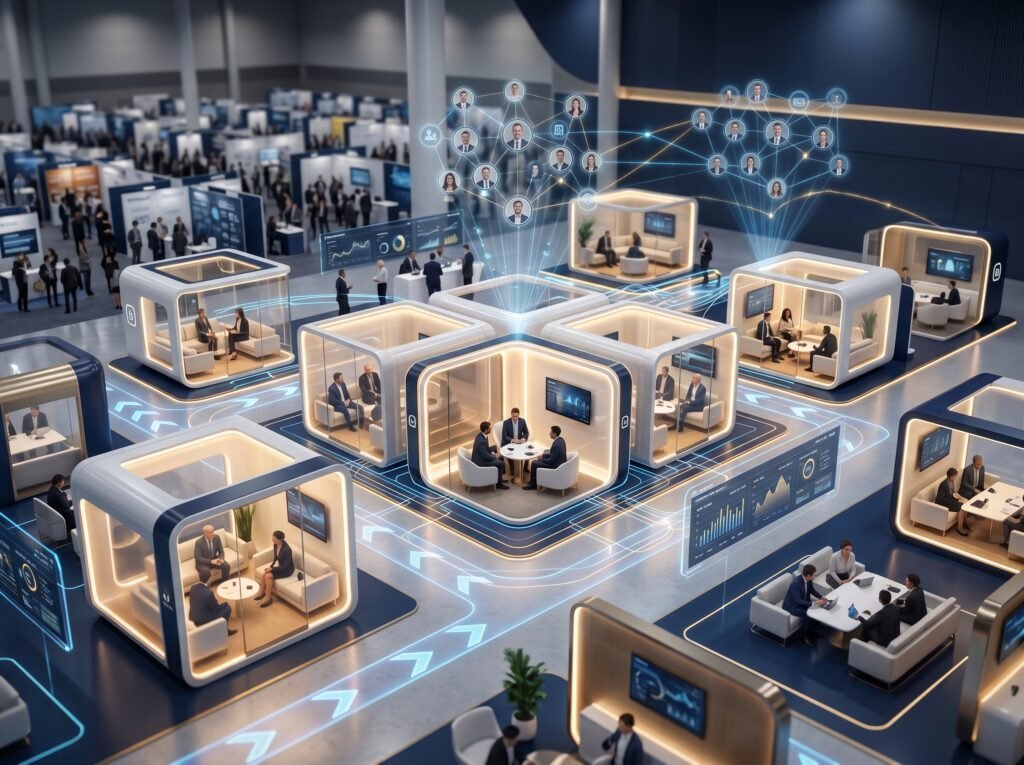
How Intimate, Data-Driven Gatherings Are Delivering Higher Engagement, Better Networking, and Stronger ROI Than Massive Conferences
Introduction
For decades, bigger was considered better in the events industry.
Conference organizers competed to attract the largest audiences, book the biggest venues, and secure the most high-profile speakers. Success was often measured by attendance numbers alone. A packed exhibition hall, thousands of attendees, and endless rows of booths were viewed as signs of a thriving event.
But a significant shift is underway.
Across industries, organizations are increasingly moving away from large, impersonal gatherings and embracing a new model centered on quality rather than quantity. Instead of hosting events for thousands of people, many planners are creating highly curated experiences for groups as small as 10, 20, or 50 attendees.
These “micro-experiences” are transforming the way professionals connect, learn, and do business.
Driven by advances in audience analytics, AI-powered matchmaking, personalization technologies, and changing attendee expectations, smaller events are proving that meaningful engagement often happens in intimate settings rather than crowded convention halls. Participants are finding greater value in targeted discussions, curated networking opportunities, and personalized experiences designed around their specific interests and objectives.
As a result, many organizations are discovering that smaller events can generate stronger relationships, better business outcomes, and higher returns on investment than traditional large-scale conferences.
This article explores the rise of micro-experiences, the technology enabling them, and why smaller events are increasingly winning big in today’s experience-driven economy.
What Are Micro-Experiences?
Micro-experiences are intentionally designed events that prioritize depth, personalization, and meaningful interaction over scale.
Unlike traditional conferences that may host thousands of attendees, micro-events typically involve:
- 10 to 50 participants
- Carefully selected audiences
- Focused agendas
- Interactive discussions
- Personalized networking opportunities
Examples include:
- Executive roundtables
- Private industry dinners
- Investor meetups
- Leadership retreats
- Peer-learning workshops
- Curated networking sessions
- Customer advisory boards
The goal is not to maximize attendance but to maximize value for every participant.
Why Attendees Are Moving Away from Massive Events
Large conferences still play an important role in many industries, but attendees are becoming increasingly selective about where they invest their time and money.
Many professionals have experienced the challenges of traditional mega-events:
- Overcrowded venues
- Generic content
- Limited networking quality
- Information overload
- Difficulty meeting relevant people
- High travel costs
While large events offer scale and visibility, they often struggle to facilitate meaningful interactions.
Attendees may return home with dozens of business cards but few genuine connections.
Micro-experiences address this problem by creating environments where every interaction has purpose.
The Demand for Personalization
One of the strongest forces driving the micro-event trend is personalization.
Modern audiences increasingly expect experiences tailored to their interests, goals, and professional needs.
Consumers already experience personalization through:
- Streaming platforms
- E-commerce recommendations
- Social media feeds
- Digital advertising
Event attendees now expect similar levels of relevance.
Micro-events make personalization easier because organizers can design experiences around a clearly defined audience segment.
Rather than creating content for thousands of people with diverse interests, planners can focus on the specific needs of a small, targeted group.
Quality Networking Is Becoming More Valuable Than Quantity Networking
Networking remains one of the primary reasons professionals attend events.
However, networking effectiveness is increasingly being measured by relationship quality rather than contact volume.
At a traditional expo, attendees may encounter hundreds of people in a single day.
Yet many conversations remain superficial.
In contrast, smaller gatherings create opportunities for:
- Extended discussions
- Trust-building
- Collaborative problem-solving
- Peer learning
- Long-term relationship development
Participants often leave with fewer contacts but significantly stronger connections.
For business professionals, this frequently translates into greater long-term value.
The Data Revolution Behind Micro-Experiences
The rise of micro-events would not be possible without advances in data collection and audience intelligence.
Today’s event platforms can gather information about attendees through:
- Registration forms
- Behavioral analytics
- Session preferences
- Networking interests
- Professional backgrounds
- Industry sectors
This data allows organizers to understand participants on a much deeper level.
Rather than relying on assumptions, planners can use insights to create highly relevant event experiences.
AI-Powered Audience Matchmaking
Perhaps the most transformative innovation supporting micro-experiences is intelligent matchmaking.
Many event technology platforms now use artificial intelligence to recommend connections based on:
- Shared interests
- Business goals
- Professional expertise
- Purchasing intent
- Industry focus
- Collaboration opportunities
Instead of leaving networking to chance, organizers can proactively facilitate introductions between highly compatible participants.
The result is a significantly higher likelihood of productive conversations.
From Random Encounters to Curated Connections
Traditional networking often resembles a numbers game.
Attendees move through crowded rooms hoping to meet the right people.
Micro-experiences take a different approach.
Every participant is intentionally selected.
Every conversation is designed to create value.
Every interaction has context.
Imagine attending a dinner with twelve executives who all face similar business challenges.
Compared to wandering through a convention center filled with thousands of strangers, the opportunity for meaningful discussion becomes dramatically greater.
This intentionality is one of the defining characteristics of successful micro-events.
Higher Engagement Through Smaller Groups
Engagement tends to increase as group size decreases.
In large conference sessions, audience participation is often limited.
Many attendees remain passive listeners.
Smaller events encourage active involvement.
Participants are more likely to:
- Ask questions
- Share experiences
- Contribute ideas
- Participate in discussions
- Build relationships
This level of interaction creates a more memorable and valuable experience.
Learning Becomes More Collaborative
Traditional conferences often rely on one-way information delivery.
Experts speak.
Attendees listen.
Micro-experiences shift the focus toward collaborative learning.
Instead of presenting solutions, organizers facilitate conversations.
Participants learn from:
- Peer experiences
- Group discussions
- Shared challenges
- Collective expertise
This format often generates insights that cannot be obtained through presentations alone.
Why Sponsors Are Embracing Smaller Events
At first glance, micro-events may appear less attractive to sponsors due to their limited audience size.
However, many sponsors are discovering the opposite.
Smaller events frequently deliver:
- Higher engagement rates
- Better lead quality
- Stronger relationships
- Increased trust
- More meaningful conversations
For sponsors, meeting twenty highly qualified prospects can be more valuable than generating hundreds of superficial interactions.
The emphasis shifts from lead quantity to lead quality.
The Economics of Micro-Experiences
Smaller events also offer compelling financial advantages.
While large conferences require significant investments in:
- Venues
- Production
- Staffing
- Marketing
- Logistics
micro-events can often operate with greater efficiency.
Benefits include:
- Lower operational costs
- Reduced venue expenses
- Simplified logistics
- Faster planning cycles
At the same time, attendees frequently perceive greater value because the experience feels more exclusive and personalized.
Exclusivity Creates Demand
Scarcity often increases perceived value.
An invitation-only executive dinner for twenty industry leaders may generate more excitement than an open conference with thousands of attendees.
Exclusivity can enhance:
- Attendance rates
- Engagement levels
- Participant commitment
- Brand perception
Many organizations use micro-events to create premium experiences that strengthen relationships with customers, partners, and stakeholders.
Hybrid Models Are Emerging
Importantly, the rise of micro-experiences does not necessarily signal the end of large events.
Instead, many organizers are combining both approaches.
Large conferences increasingly incorporate:
- VIP roundtables
- Small-group workshops
- Curated networking sessions
- Private executive meetings
- Industry-specific meetups
These smaller experiences often become the most valuable components of larger events.
The future may belong not to one format or the other, but to strategic combinations of both.
Challenges of Running Successful Micro-Events
Despite their advantages, micro-events present unique challenges.
Audience Selection
The success of the event depends heavily on choosing the right participants.
Poor attendee selection can reduce value significantly.
Facilitation Requirements
Smaller groups require skilled moderation to maintain engagement and encourage participation.
Scalability
Micro-events may need to be repeated multiple times to reach larger audiences.
Measuring Success
Traditional attendance metrics become less relevant.
Organizers must focus on:
- Relationship quality
- Business outcomes
- Participant satisfaction
- Long-term impact
These metrics can be more difficult to quantify but often provide a clearer picture of event value.
The Future of Event Design
As attendee expectations continue evolving, many experts believe the future of events will become increasingly personalized.
Advances in:
- Artificial intelligence
- Predictive analytics
- Behavioral data
- Audience segmentation
will allow organizers to design experiences tailored to increasingly specific audiences.
Rather than asking how many people attended, organizations will ask:
- How many meaningful connections were created?
- How much business value was generated?
- How engaged were participants?
- What long-term relationships emerged?
These questions align naturally with the strengths of micro-experiences.
Conclusion
The rise of micro-experiences represents one of the most significant shifts in the modern events industry. As professionals become more selective about where they invest their time, smaller, highly curated gatherings are emerging as powerful alternatives to traditional large-scale conferences.
By leveraging audience data, AI-powered matchmaking, and intentional event design, organizers can create environments where meaningful conversations flourish and genuine relationships develop. Rather than overwhelming attendees with endless networking opportunities, micro-events focus on connecting the right people at the right time for the right reasons.
The result is often higher engagement, stronger business outcomes, and greater return on investment for attendees, sponsors, and organizers alike.
While massive conventions and expos will continue to play an important role, the growing popularity of micro-experiences suggests that the future of events may not be defined by size. Instead, it may be defined by relevance, personalization, and the ability to create authentic human connections in an increasingly crowded world.