 By
By
Introduction
The event management industry has undergone a remarkable transformation over the past decade. What was once an industry heavily dependent on spreadsheets, manual coordination, and countless hours of administrative work is rapidly evolving into a technology-driven ecosystem powered by Artificial Intelligence (AI). Today, event organizers are expected to deliver seamless experiences, personalized interactions, and measurable outcomes while managing increasingly complex logistics. To meet these demands, many professionals are turning to AI-powered tools that automate repetitive tasks, enhance attendee engagement, and provide valuable insights that improve decision-making.
Artificial Intelligence is no longer a futuristic concept reserved for large corporations or technology companies. It has become an accessible and practical resource for event planners of all sizes. From corporate conferences and trade shows to festivals and virtual events, AI is helping organizers save time, reduce costs, and create experiences that feel more relevant and engaging to attendees.
One of the biggest advantages of AI in event management is its ability to process and analyze vast amounts of data in real time. This allows event professionals to make informed decisions, predict attendee behavior, and optimize every stage of the event lifecycle. Whether it is automating registration, recommending personalized schedules, facilitating networking opportunities, or analyzing post-event feedback, AI is revolutionizing how events are planned and executed.
As the events industry continues to embrace digital transformation, understanding how AI works and how it can be applied effectively has become essential for event professionals who want to remain competitive. This article explores how AI is changing the game in event management, examines the key areas where automation is making an impact, and highlights practical AI tools that event planners can use right now to improve efficiency and deliver exceptional experiences.
Understanding AI in Event Management
Artificial Intelligence refers to computer systems that can perform tasks typically requiring human intelligence. These tasks include learning from data, recognizing patterns, making predictions, processing language, and automating decision-making processes.
In event management, AI serves as a digital assistant capable of handling repetitive tasks, analyzing attendee behavior, and generating insights that help planners make smarter decisions. Rather than replacing human expertise, AI complements it by taking care of time-consuming administrative responsibilities and allowing event professionals to focus on strategy, creativity, and relationship building.
The adoption of AI in event management has accelerated due to several factors:
- Growing attendee expectations for personalized experiences
- Increased demand for hybrid and virtual events
- Rising operational costs
- Greater availability of event data
- Advances in machine learning and natural language processing
As a result, AI is becoming integrated into nearly every aspect of event planning and execution.
Streamlining Registration Through AI Automation
Registration is often the first interaction attendees have with an event. A complicated or inefficient registration process can create frustration before the event even begins. Traditionally, registration involved manual data entry, ticket management, attendee verification, and customer support inquiries. AI is dramatically simplifying these processes.
Intelligent Registration Systems
Modern AI-powered registration platforms can automatically collect, verify, and organize attendee information. Instead of manually reviewing registration data, AI systems can detect duplicate entries, identify incomplete forms, and flag suspicious activity.
These systems also learn from user behavior and can optimize registration workflows over time. For example, if attendees frequently abandon the registration process at a specific step, the AI can identify the issue and recommend improvements.
Predictive Attendance Forecasting
One of the most valuable applications of AI during registration is attendance prediction. By analyzing historical registration patterns, ticket purchases, and attendee demographics, AI can forecast attendance levels with surprising accuracy.
This helps organizers:
- Estimate venue capacity requirements
- Plan staffing levels
- Allocate resources effectively
- Manage catering needs
- Improve budget forecasting
Accurate attendance predictions reduce waste and improve overall event efficiency.
AI-Powered Chatbots for Registration Support
Attendees often have questions during registration. Instead of requiring human support staff to answer repetitive inquiries, AI chatbots can provide instant assistance.
Common registration questions include:
- How do I register?
- Can I transfer my ticket?
- What payment methods are accepted?
- Where can I access my event pass?
- How do I update my registration details?
AI chatbots can handle these inquiries 24 hours a day, improving customer satisfaction while reducing support costs.
Personalizing the Attendee Experience
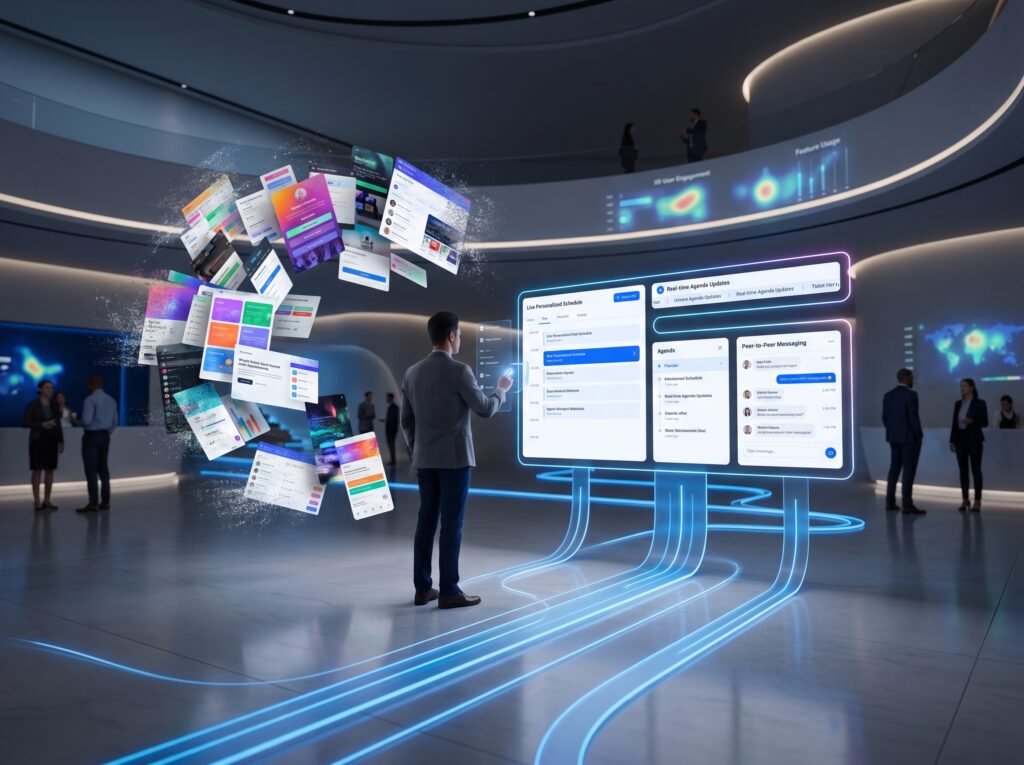
Modern event attendees expect more than generic agendas and one-size-fits-all experiences. They want content, networking opportunities, and activities tailored to their interests. AI enables event planners to deliver highly personalized experiences at scale.
Personalized Event Agendas
Large conferences often feature dozens or even hundreds of sessions. Navigating these options can be overwhelming for attendees.
AI-powered event platforms analyze attendee profiles, preferences, job roles, industries, and past behavior to recommend relevant sessions.
For example:
- A marketing executive may receive recommendations for branding workshops.
- A software developer may be directed toward technical sessions.
- A startup founder may be shown investor networking opportunities.
These recommendations help attendees maximize the value of their event experience.
Dynamic Content Recommendations
AI continuously learns from attendee interactions throughout the event.
If an attendee shows interest in sustainability-related content, the system can recommend additional sessions, speakers, and exhibitors related to that topic.
This creates a personalized journey that evolves in real time.
Personalized Notifications
Instead of sending the same announcements to everyone, AI can deliver targeted notifications based on attendee interests and behavior.
Examples include:
- Session reminders
- Networking suggestions
- Exhibitor recommendations
- Exclusive offers
- Event updates
Personalized communication increases engagement while reducing information overload.
AI-Powered Networking and Matchmaking
Networking remains one of the primary reasons people attend events. However, finding the right connections in a large crowd can be challenging.
AI is transforming networking through intelligent matchmaking systems.
How AI Matchmaking Works
AI analyzes attendee profiles, interests, goals, industries, and interaction history to identify valuable connections.
The technology can recommend meetings between:
- Buyers and suppliers
- Investors and startups
- Recruiters and candidates
- Industry peers
- Potential business partners
Rather than relying on chance encounters, attendees receive personalized networking suggestions.
Benefits of AI Networking
AI-powered matchmaking delivers several advantages:
Better Connection Quality
Attendees are introduced to people who align with their professional goals and interests.
Increased Engagement
Relevant networking opportunities encourage attendees to participate more actively.
Higher Return on Investment
Meaningful business connections improve event value for attendees and sponsors.
Enhanced Event Satisfaction
Attendees are more likely to view an event positively when they make valuable professional connections.
Revolutionizing Event Marketing Through AI
Marketing plays a critical role in event success. AI is helping event marketers attract the right audiences and improve campaign performance.
Audience Segmentation
Traditional marketing often relies on broad audience categories. AI enables much more sophisticated segmentation.
By analyzing user behavior, demographics, and engagement patterns, AI can identify highly specific audience groups.
This allows organizers to create targeted campaigns that resonate with individual attendee segments.
Predictive Marketing Analytics
AI can forecast which marketing strategies are most likely to generate registrations.
By examining historical campaign performance, AI can predict:
- Ticket sales trends
- Email open rates
- Conversion rates
- Advertising effectiveness
These insights help marketers allocate budgets more efficiently.
Content Generation
AI-powered writing tools assist with creating:
- Event descriptions
- Social media posts
- Email campaigns
- Speaker announcements
- Promotional materials
This reduces content creation time while maintaining consistency across marketing channels.
Enhancing Customer Support With AI Chatbots
Customer support is an essential component of successful event management. AI chatbots are becoming increasingly sophisticated and capable of handling a wide range of attendee inquiries.
Before the Event
Chatbots can assist with:
- Registration support
- Ticket purchases
- Venue information
- Travel recommendations
- Agenda questions
During the Event
Attendees can use chatbots to access:
- Session schedules
- Room locations
- Speaker information
- Real-time updates
- Networking assistance
After the Event
Chatbots can help with:
- Certificate downloads
- Feedback collection
- Access to recorded sessions
- Follow-up communications
This continuous support improves attendee experiences while reducing pressure on event staff.
Real-Time Event Monitoring and Analytics
One of AI’s most powerful capabilities is real-time data analysis.
During an event, organizers generate enormous amounts of data through registrations, mobile apps, surveys, networking interactions, and attendee behavior.
AI systems can process this information instantly.
Measuring Engagement
AI can track:
- Session attendance
- Audience participation
- Mobile app activity
- Networking interactions
- Social media engagement
These metrics provide immediate visibility into event performance.
Identifying Problems Quickly
If attendee engagement begins to decline, AI can detect the issue and alert organizers.
Potential concerns include:
- Overcrowded sessions
- Technical difficulties
- Low participation rates
- Scheduling conflicts
Early detection allows planners to take corrective action before problems escalate.
Transforming Post-Event Feedback Analysis
Collecting feedback is easy. Extracting meaningful insights from thousands of responses is much more difficult.
AI excels at analyzing large datasets and identifying patterns.
Sentiment Analysis
AI can evaluate attendee comments and determine whether feedback is positive, negative, or neutral.
This provides a clear understanding of overall attendee satisfaction.
Theme Identification
Rather than manually reviewing hundreds of survey responses, AI identifies recurring themes automatically.
Examples might include:
- Praise for keynote speakers
- Requests for additional networking opportunities
- Complaints about venue logistics
- Positive reactions to event technology
These insights help planners improve future events.
Predictive Recommendations
Advanced AI systems can suggest specific improvements based on feedback trends.
This allows event professionals to make data-driven decisions rather than relying on assumptions.
AI Tools Event Planners Can Use Today
Several AI-powered platforms are already helping event professionals improve efficiency and attendee experiences.
Cvent
Cvent offers event registration, attendee management, analytics, and AI-driven insights that streamline event operations.
Bizzabo
Bizzabo provides AI-powered event management features designed to improve engagement and event performance.
Swapcard
Swapcard uses artificial intelligence to deliver personalized content recommendations and networking opportunities.
Brella
Brella specializes in AI-driven networking and attendee matchmaking.
Grip
Grip focuses on connecting attendees through intelligent relationship recommendations.
HubSpot AI
HubSpot helps event marketers automate campaigns and personalize audience engagement.
Jasper
Jasper assists with content creation, including event promotions, emails, and social media content.
Qualtrics XM
Qualtrics provides AI-powered sentiment analysis and feedback management tools.
SurveyMonkey Genius
SurveyMonkey offers automated survey insights and recommendation features.
MonkeyLearn
MonkeyLearn specializes in text analysis and feedback categorization.
Challenges and Considerations
While AI offers substantial benefits, successful implementation requires careful planning.
Data Privacy
AI relies on attendee data to generate insights and personalization.
Event organizers must comply with privacy regulations and communicate clearly about data usage.
Human Oversight
AI is powerful, but it is not perfect. Human judgment remains essential for strategic planning and relationship management.
Technology Costs
Some AI solutions require significant investment. Organizations should evaluate potential return on investment before adoption.
Integration Challenges
AI tools should integrate seamlessly with existing event management systems to maximize effectiveness.
The Future of AI in Event Management
The future of event management will likely be shaped by even more advanced AI capabilities.
Emerging innovations include:
- Virtual AI event assistants
- Real-time language translation
- AI-generated event content
- Predictive attendee engagement models
- Immersive hybrid event experiences
- Advanced audience sentiment tracking
As these technologies mature, event organizers will gain even greater opportunities to create personalized, data-driven experiences.
Conclusion
Artificial Intelligence is fundamentally reshaping the event management industry. By automating registration, personalizing attendee experiences, improving networking opportunities, enhancing marketing efforts, and providing actionable insights, AI is enabling event professionals to work smarter and deliver more successful events.
Rather than replacing event planners, AI acts as a powerful partner that handles repetitive tasks and transforms complex data into meaningful insights. This allows organizers to focus on creativity, strategy, and human connection—the elements that truly make events memorable.
As attendee expectations continue to evolve, organizations that embrace AI will be better positioned to deliver exceptional experiences, increase operational efficiency, and achieve stronger event outcomes. The future of event management is not simply digital; it is intelligent, personalized, and powered by AI.