
 By
By
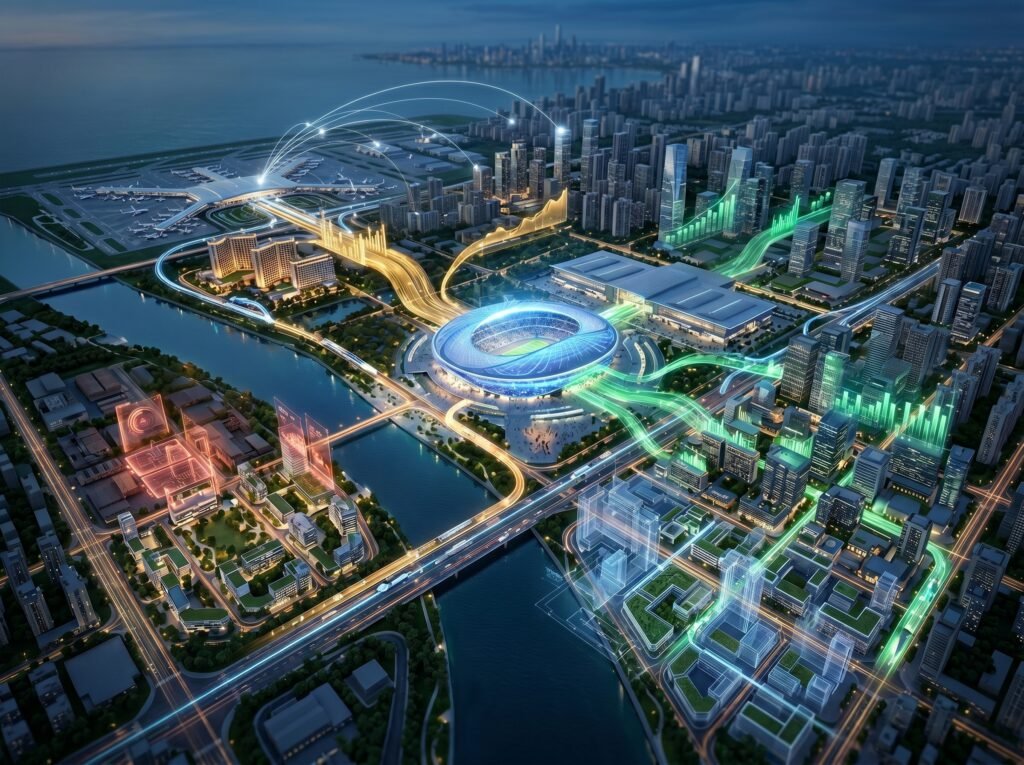
Weighing the Costs, Opportunities, and Long-Term Legacy of Global Events
Introduction
Every few years, cities around the world compete fiercely for the opportunity to host major international events. Whether it is the Olympic Games, the FIFA World Cup, a World Expo, a major political summit, or a globally recognized cultural festival, these mega-events promise worldwide exposure, economic growth, tourism expansion, and infrastructure development.
The stakes are enormous. Hosting a mega-event can attract millions of visitors, generate billions of dollars in spending, create thousands of jobs, and place a city firmly on the global stage. Governments and local authorities often present these events as catalysts for urban transformation, capable of accelerating projects that might otherwise take decades to complete.
Yet mega-events also come with substantial risks. Infrastructure projects frequently exceed budgets. Temporary construction booms can leave behind underutilized facilities. Public funds are often diverted from other priorities, and the anticipated economic benefits do not always materialize at the scale originally projected.
This reality has sparked ongoing debate among economists, urban planners, policymakers, and business leaders. Are mega-events truly worthwhile investments for host cities? Or do the costs often outweigh the benefits?
The answer is rarely simple.
The economic impact of mega-events extends far beyond ticket sales and tourism receipts. Their influence can shape employment, infrastructure, investment, international reputation, urban development, and long-term economic competitiveness for decades. Understanding these complex dynamics requires a balanced examination of both the immediate economic gains and the lasting legacy these events leave behind.
What Qualifies as a Mega-Event?
Mega-events are large-scale international gatherings that attract significant global attention, extensive media coverage, and substantial public investment.
Examples include:
- Olympic Games
- FIFA World Cup
- World Expos
- Commonwealth Games
- International trade expos
- Global cultural festivals
- Political summits
- International sporting championships
These events typically share several characteristics:
Massive Attendance
Millions of spectators may attend in person.
Global Broadcast Reach
Audiences often reach hundreds of millions—or even billions—of viewers worldwide.
Significant Infrastructure Investment
Host cities frequently construct or upgrade:
- Stadiums
- Airports
- Transportation systems
- Hotels
- Public spaces
Extensive Economic Activity
Large volumes of spending occur across multiple sectors.
Because of their scale, mega-events can influence entire regional economies rather than simply benefiting event organizers.
The Immediate Economic Benefits
The most visible economic impact of a mega-event occurs during the preparation and event delivery phases.
Tourism Growth
Tourism is often the primary economic justification for hosting major events.
Visitors spend money on:
- Hotels
- Restaurants
- Transportation
- Entertainment
- Retail purchases
- Local attractions
This spending creates revenue for local businesses and generates tax income for governments.
A major international event can introduce a destination to millions of potential future travelers who may not have previously considered visiting.
Hospitality Sector Gains
Hotels often experience:
- Higher occupancy rates
- Increased room pricing
- Extended booking periods
Restaurants, bars, and tourism operators similarly benefit from increased visitor demand.
For many local businesses, a mega-event represents one of the most profitable periods in years.
Employment Opportunities
Preparing for a major event often creates significant employment opportunities.
Construction Jobs
Infrastructure projects require large workforces.
Examples include:
- Stadium construction
- Transportation upgrades
- Urban redevelopment
- Hospitality expansion
Event Operations Jobs
During the event itself, additional staffing is required for:
- Security
- Logistics
- Hospitality
- Transportation
- Media operations
- Venue management
These activities generate temporary and, in some cases, long-term employment opportunities.
Infrastructure Development as an Economic Catalyst
One of the most significant potential benefits of hosting mega-events is accelerated infrastructure investment.
Cities frequently use major events as deadlines for projects that would otherwise face delays.
Transportation Improvements
Host cities often invest heavily in:
- Airports
- Rail systems
- Metro networks
- Road infrastructure
- Public transit expansion
These improvements can continue benefiting residents long after the event concludes.
Example: Urban Transformation
Many cities have leveraged mega-events to modernize transportation systems, reduce congestion, and improve regional connectivity.
When planned effectively, these upgrades contribute to economic productivity for decades.
Attracting Foreign Investment
Mega-events place cities in front of global audiences.
This visibility can influence future investment decisions.
International businesses may become more aware of:
- Local industries
- Business opportunities
- Workforce capabilities
- Infrastructure quality
As a result, some host cities experience increased foreign direct investment following successful events.
Investors often view improved infrastructure and international recognition as indicators of economic potential.
Enhancing Global Brand Recognition
Cities increasingly compete for talent, tourists, businesses, and investment.
Mega-events provide opportunities to strengthen destination branding.
Global Exposure
Television broadcasts, digital media coverage, and social media engagement showcase host cities to international audiences.
Successful events can reshape perceptions and improve global reputation.
Cities often use these opportunities to promote:
- Tourism attractions
- Business environments
- Cultural assets
- Innovation ecosystems
A strong international image can generate economic benefits long after the event ends.
The Multiplier Effect
Economic impact extends beyond direct spending.
When visitors spend money at local businesses, those businesses subsequently purchase goods and services from suppliers and pay employee wages.
Economists refer to this process as the multiplier effect.
For example:
- A visitor pays for a hotel room.
- The hotel purchases supplies from local vendors.
- Employees spend wages within the local economy.
- Additional businesses benefit indirectly.
This chain reaction can amplify the overall economic impact of event-related spending.
The Challenges and Costs of Hosting Mega-Events
While benefits receive significant attention during bidding processes, the costs can be substantial.
Construction Cost Overruns
Mega-event budgets frequently exceed original estimates.
Common reasons include:
- Inflation
- Project delays
- Scope changes
- Labor shortages
- Security requirements
Large-scale construction projects are particularly vulnerable to cost escalation.
When overruns occur, taxpayers often absorb the financial burden.
The Risk of Underused Infrastructure
One of the most common criticisms of mega-events involves “white elephant” projects.
These are expensive facilities that have limited utility after the event concludes.
Examples may include:
- Oversized stadiums
- Specialized venues
- Temporary event infrastructure
Without clear post-event plans, maintenance costs can become significant long-term liabilities.
Successful host cities typically prioritize facilities with sustainable future uses.
Opportunity Costs
Every dollar spent on a mega-event is a dollar that cannot be spent elsewhere.
Critics often argue that public funds might generate greater value if directed toward:
- Education
- Healthcare
- Housing
- Public services
- Local economic development
This concept is known as opportunity cost.
Decision-makers must evaluate whether event investments produce returns that justify foregoing alternative projects.
Tourism Displacement Effects
While mega-events attract visitors, they can also discourage traditional tourists.
Some travelers avoid destinations during major events due to:
- Higher prices
- Crowding
- Transportation disruptions
As a result, projected tourism gains may sometimes be partially offset by declines in regular visitor activity.
Accurately measuring net tourism impact remains a complex challenge.
Case Study: The Olympic Games
The Olympic Games provide perhaps the most frequently studied example of mega-event economics.
Historically, outcomes have varied significantly.
Positive Outcomes
Some host cities have successfully leveraged the Olympics to:
- Improve infrastructure
- Increase international visibility
- Revitalize urban areas
Challenges
Others have struggled with:
- Cost overruns
- Underutilized venues
- Long-term debt obligations
The key differentiator often lies in legacy planning rather than event execution alone.
Cities that integrate Olympic investments into broader development strategies generally achieve stronger long-term outcomes.
Case Study: The FIFA World Cup
The FIFA World Cup offers another perspective on mega-event economics.
Compared with the Olympics, World Cup infrastructure requirements are often more focused on stadiums and transportation.
Potential benefits include:
- Tourism growth
- Global media exposure
- Infrastructure improvements
- Enhanced national branding
However, concerns frequently arise regarding:
- Stadium utilization after the tournament
- Public spending priorities
- Maintenance costs
Again, long-term planning plays a critical role in determining success.
Measuring Long-Term Legacy
The true value of a mega-event often emerges years after the closing ceremony.
Economic assessments increasingly focus on legacy outcomes rather than short-term spending alone.
Key indicators include:
Infrastructure Utilization
Are facilities still being used effectively?
Tourism Growth
Did visitor numbers remain elevated after the event?
Investment Attraction
Has business activity increased?
Urban Regeneration
Did redevelopment improve local communities?
Employment Impact
Were temporary jobs converted into lasting opportunities?
Cities that perform well across these dimensions are generally viewed as successful hosts.
The Importance of Strategic Planning
Research consistently suggests that mega-events themselves do not automatically create economic prosperity.
Rather, they create opportunities.
The benefits depend largely on how those opportunities are managed.
Successful cities typically:
- Align event investments with long-term goals
- Prioritize sustainable infrastructure
- Develop realistic budgets
- Engage local communities
- Create post-event utilization plans
Poor planning can transform a major opportunity into a financial burden.
Strong planning can transform a temporary event into a lasting catalyst for growth.
Lessons for Future Host Cities
As competition to host major events continues, several lessons have emerged.
Build for Legacy, Not Just the Event
Infrastructure should serve residents after the event concludes.
Prioritize Existing Assets
Using existing facilities reduces financial risk.
Focus on Sustainable Development
Projects should align with broader urban planning objectives.
Measure Success Beyond Attendance
Long-term economic outcomes matter more than short-term visitor numbers.
Maintain Financial Discipline
Realistic budgeting reduces the likelihood of costly overruns.
The Future of Mega-Events
The next generation of mega-events is likely to place greater emphasis on:
- Sustainability
- Cost control
- Community impact
- Legacy planning
- Technology integration
Host cities are becoming more cautious about large-scale investments, while event governing bodies are increasingly encouraging the use of existing infrastructure.
This shift reflects growing recognition that long-term value matters more than temporary spectacle.
Conclusion
Mega-events occupy a unique position at the intersection of sports, culture, tourism, infrastructure, and economic development. When managed effectively, they can stimulate tourism, attract investment, accelerate infrastructure projects, create employment opportunities, and elevate a city’s global profile. These benefits can generate positive economic impacts that extend far beyond the event itself.
However, hosting a mega-event is far from a guaranteed success. Significant upfront costs, construction overruns, underutilized facilities, and opportunity costs can undermine projected returns if planning is inadequate. The difference between a transformative investment and a costly mistake often comes down to strategic vision, financial discipline, and legacy-focused development.
Ultimately, mega-events should not be viewed as economic solutions in their own right. Rather, they are powerful tools that can support broader urban and economic goals when integrated into long-term planning frameworks. Cities that approach them with clear objectives, sustainable strategies, and realistic expectations are most likely to reap lasting rewards.
In the end, the true measure of a mega-event’s success is not what happens during the event itself—but what remains long after the crowds have gone home.